Episode
#153 The Neuroscience of Philanthropy: Why Giving is a Brain Game
Listen on your favorite platform:


Enjoying the episode? Get the next one in your inbox
New episodes, blog posts and Bayesian modeling resources — roughly once a month.
In a world where we are constantly bombarded with requests for our time and money, how do we actually decide to be generous? In this episode, I sit down with Cherian Koshy, VP at Kindsight and author of NeuroGiving: The Science of Donor Decision Making, to explore the fascinating intersection of behavioral science, philanthropy, and predictive modeling.
Beyond the "Hard Sell": Fundraising as Belief Updating
One of the most provocative shifts Koshy suggests is moving away from the idea of persuasion. He argues that fundraising should not be a hard sell, or an attempt to push someone into caring. Instead, he views it through a Bayesian lens as belief updating.
People generally already care about causes and see themselves as generous. The real question for nonprofits is: Under what conditions does generosity align with the identity that people already want to live out? When a donor interacts with an organization, they aren't just making an economic choice; they are making a cognitive and identity-based decision. Every interaction serves as evidence that either reinforces or contradicts their existing priors about their own identity and the organization's trustworthiness.
The Paradox of the Generosity Gap
The episode dives into a concerning trend known as the generosity gap: while total donation amounts are increasing, the actual number of individual donors is declining. This suggests that generosity is concentrating among a smaller group of committed donors with strong, positive trust priors.
To bridge this gap, Koshy suggests that organizations must focus on:
- Building trust biologically: Trust is not just squishy; it's a biological process involving oxytocin and reward systems.
- Micro-engagement: Much like starting a fitness routine with one pull-up a day, donors need micro-doses of engagement to build momentum and update their trust priors over time.
- Eliminating friction: Many organizations accidentally sabotage themselves with complicated donation forms. These shift the donor’s brain from generosity mode into risk assessment mode, leading to high rates of cart abandonment.
The Role of Ethical AI
As AI becomes more prevalent in the nonprofit sector, Koshy warns against using it purely as an extraction engine to maximize short-term revenue. While algorithms can predict who is likely to give based on emotional triggers, doing so can undercut long-term trust.
Instead, ethical AI should be used to help institutions remember donors better. By using AI to track and reflect a donor's interests and history, organizations can build a trust history that transforms a transactional relationship into a meaningful, long-term alignment.
Generosity as "The New Green Juice"
Perhaps the most compelling takeaway is that generosity is hardwired into our biology. Acts of giving activate the brain’s reward systems and social bonding chemistry, producing dopamine and oxytocin. Research indicates that being generous can lower stress levels and provide health benefits comparable to quitting smoking.
Ultimately, generosity is the invisible infrastructure of our communities. When we align our actions with our identity as generous people, we don't just help a cause -- we become our best selves.
Hope you enjoyed, and see you in two weeks, my dear Bayesians!
---
For more insights into the science of decision-making, listen to the full episode at the top of this page.
You can also interact with the episode on NotebookLM! Ask Gemini questions, flashcards, infographics, and more.
Chapters
00:00 What's the role of Behavioral Science in Philanthropy?
19:57 What is The Neuroscience of Generosity?
24:40 How can we best understand Donor Decision-Making?
32:14 How can we achieve reframe Beliefs and Actions?
35:39 What is the role of Identity in Habit Formation?
38:06 What is the Generosity Gap in Philanthropy?
45:06 How can we reduce Friction in Donation Processes?
48:27 What is the role of AI and Trust in Nonprofits?
52:11 How can we build Predictive Models for Donor Behavior?
55:41 What is the role of Empathy in Sales and Stakeholder Engagement?
01:00:46 How can we best align ideas with Stakeholder Beliefs?
01:02:06 How can we explore Generosity and Memory?
Thank you to my Patrons for making this episode possible!
Links from the show
- Come meet Alex at the Field of Play Conference in Manchester, UK, March 27, 2026!
- Bayesian workflow agent skill
- Neurogiving, The Science of Donor Decision-Making
- Cherian's website
In this episode, we are exploring the fascinating intersection of behavioral science, philanthropy, and predictive modeling.
My guest, Chiran Koshi, is a vice president at Kinside and the USA Today bestselling author of NeuroGiving, the science of donor decision making.
He's a certified fundraising executive with certificates in behavioral science from Harvard and
AI ethics from the London School of Economics.
In this episode, Chirian and I dive into the neuroscience behind donor decision-making and why fundraising should focus on belief updating rather than just a hard sell.
We'll discuss the generosity gap, these paradoxes where overall donations are up but fewer people are actually giving, and how to eliminate the invisible friction that hinders
donations.
We'll also look at the role
of ethical AI in nonprofits, how it can help institutions remember donors better, and how predictive models can build trust and align stakeholder interests.
This is Learning Basics Statistics, episode 153, recorded March 10, 2026.
Welcome Bayesian Statistics, a podcast about Bayesian inference, the methods, the projects, and the people who make it possible.
I'm your host, Alex Andorra.
You can follow me on Twitter at alex-underscore-andorra.
like the country.
For any info about the show, learnbasedats.com is Laplace to be.
Show notes, becoming a corporate sponsor, unlocking Beijing merch, supporting the show on Patreon, everything is in there.
That's learnbasedats.com.
If you're interested in one-on-one mentorship, online courses, or statistical consulting, feel free to reach out and book a call at topmate.io slash alex underscore and dora.
See you around, folks, and best Beijing wishes to you all.
Hello, my dear Bayshians!
I have great news for you today from here, learning Bayesian statistics, because we just open-sourced our first agent skill about our beloved Bayesian workflow.
That is an opinionated guide that teaches coding agents how to do Bayesian statistics properly, or, well, at least I think it is.
It enforces a strict
9-step process from prior elicitation through reporting with guardrails that the agent won't apply on its own.
It works with cloud code, chemicoat, cursor, GminI CLI and any tool that supports the OpenAgent Skills spec.
What we wanted to do differently for that skill was to mandate prior and post-operative checks.
No skipping of that.
Requires loop-beat calibration, so not just the trace plots look fine.
Producing a companion analysis report alongside the code each time you use the skill to create a model.
Adapting the reporting for non-technical agencies, a boss, a medical board, a client, even your dog if you want.
And it also uses modern PIMC best practices like the Nut5 Sampler, Quartz, Deem, XRE First, and it does all that without you having to think about doing it.
It's lean on purpose, one workflow that does the fundamentals right, rather than an encyclopedia that tries to cover everything.
I put the link in the show notes, you can install and try it from there.
It's on GitHub, it's all free, all open source.
And this is part of the bigger project that I'm calling Bajan Skills, a set of skills to call your agent Baze.
Thomas Baze.
Which means...
that most specialized skills, different domains, different frameworks, etc.
are coming very soon.
This really is a first version, so do let us know if you find bugs or unexpected behavior, and even better, do reach out if you want to help with issues, PRs, ideas, etc.
Anyways, I hope you enjoy using this agent skill.
Reach out if you want to help, share it around if you did like it, and now, enjoy today's episode.
See you folks.
I'm Cheering Cauchy.
Welcome to Learning Belgian Statistics.
Thank you so much.
It's great to be here.
Yeah, it's going to be fun.
think it's going to be quite an original episode for listeners, not so much by the shape of it and the way we do things, but much more by the content of it.
Where today we're going to be on the practical side of things and something that listeners know I really care about, which is how do you apply...
cutting edge research and science in everyday life.
And so that's why I was really interested in talking to you.
um We're going to talk about that.
We're going to talk about your new book.
But first, as usual, I'd like to have your origin story.
And you do have a very interesting one because when I was preparing for the show, um of course, I stalked you, you know, like I have to do.
I'm basically a professional stalker.
So oh that's pretty fun.
uh
That what I read that so yes, you are your VP at Kinslide and your best selling author, but you're also a Guinness World Record holder and a Kentucky Colonel.
yes.
Yeah.
What's that about?
Have I read something?
Is that right?
Or was I misinformed?
And what is all that about?
Uh, it is true.
Uh, and I will say that it makes my background look slightly more adventurous than
My my real background really is so The Guinness World Record was achieved at one of my one of my previous jobs We got the Guinness World Record for the most text messages ever sent
simultaneously It was previously held by Bell Canada and then uh we we got it um Jeez almost almost 20 years ago now
So it's held for a long time, at least as far as I know.
And so that was a fun thing that we did for a promotional period for something.
And then the Kentucky Colonel was one that I just received a little while ago, honorary designation for um service to the state.
It's an award that's given by the governor and for community service for things for philanthropy and things like that.
And that's a great honor.
It's actually the reason why the Kentucky fried chicken colonel Sanders is a colonel.
So that doesn't mean that I get any benefit at Kentucky Fried Chicken, unfortunately.
Yeah, I mean, yeah, probably better for you for your health.
Yeah, probably.
Yeah.
Before we move on, I have to ask on the Guinness stuff, how does it work?
Did you guys knew you were breaking the record at the time?
Like playing the concerted effort.
Yeah, absolutely.
So it was a land effort.
So we contacted Guinness.
We let them know someone from Guinness comes and and then we knew that we had enough people in one place to be able to break the record.
We had a sprint as a sponsor.
And so because it was a text message thing, we wanted to do something, you know, as a fundraiser, I was like, what's a cool way to be able to to
get some excitement out of a sponsor and we're like, if we could break a Guinness record, that'd be a really cool way of doing that.
And so we anticipated that we'd have enough people in one place to be able to do one thing at that time.
So we called up Guinness, got them in the room, did the thing, and then they did a big show at that moment and let us know that we won or we beat the previous Guinness record at
the time.
And so actually, you can't tell right now, but I have the poster of the Guinness record.
above my fireplace here.
Yeah, okay, okay.
Yeah, this is definitely a very niche record.
Maybe we have to think, talking to tomorrow audience too here, but maybe we have to think about the record for LearnBasedAds guys, you know.
Yeah, well, in order to break the Guinness record, you either need to have someone from Guinness there or you need to keep meticulous records on how you can validate that you've
broken the record.
So it's really, you know, they're actually quite serious about it.
uh, we just figured if we're going to do this, we're going to go all out and make sure that we have, um, the proof that we broke the record.
Yeah, no, that's good.
I think the record we can beat at LearnBasedStats is probably a record of number of messages sent at the same time about patient statistics.
I think that's definitely in my audience, uh, ballpark, know, so, so you guys let me know and then, uh, and then we'll organize that.
um
Half joking, that'd be super fun.
Yeah, something to crowdsource in the comments, right?
That fits into the story of Tyrion.
How did you find your way to the world of behavioral science and philanthropy, which is your main work?
um What's your origin story when it comes to that?
I'd love to say that it was trying to simply figure out a very simple puzzle, I originally, so I've spent the last 30 years in nonprofits, particularly in fundraising,
and I wanted to figure out how to unlock giving in particular, what makes people give.
um But what I discovered was people constantly say that they cared about causes.
Everybody says I care about this.
I care about that and they say that they want to help There's a study out of the University of Chicago last year that says that most people in the United States say that
they're generous and Yet most people don't do something about it.
They don't they don't do What they say they care about and so that it was the gap between the thing that they care about and their action that got me really interested in that
distinction and at first fundraising was was something that I was trying to solve for with better messaging, better targeting, segmentation, and really like what are the tools that
we could use?
What are the strategies that we can use?
the more that I did that through trial and error and going to conferences and learning what other people did, the more I realized or the more that I thought that this was some
sort of user error.
Like I was doing the wrong things.
or I wasn't applying it right.
So I tried to get more study in fundraising and certifications and whatnot, and it just, wouldn't work.
I didn't apply.
And so then I started studying neuroscience and behavioral science.
And then what I realized was the question that I was asking was wrong.
It was not the question of how do I convince someone to care?
People already cared.
That was true.
The real question was,
Under what conditions does generosity align with the identity that people already want to live out?
And once you look at generosity through the lens of identity and meaning and memory um and those concepts, then the whole field starts to turn and look very different.
When we're not trying to push someone into
into caring and push them into generosity, but get out of their way of generosity and create that unlock, then it changes how you view the entire profession in my mind.
Yeah, yeah, yeah, yeah.
That makes sense.
And that's related.
That makes me think also like basically into something where it's not that hard for us to identify a problem we might have or, know, like we might want to start exercising or
eating healthier, um, walking more and stuff like that.
And it's absolutely obvious that we are very, but actually doing it.
So putting...
money where our mouth is.
so yeah, that makes me think about that too, where it's like, yeah, lots of people say they want to exercise more.
They just don't do it.
So the question is more, how do you, how do you make that happen?
ah The question you're asking is how do you make that happen for philanthropy and giving?
So, ah yeah, I think it's, it's a very fascinating subject.
I have a few episodes already on behavioral science.
uh For instance, on fitness, you have all of these.
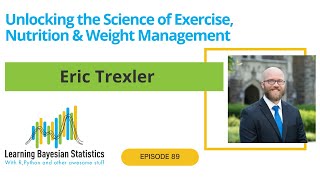
Folks remember one, especially with Eric Shrek's layer.
I will put that in the show notes.
That was more geared toward everything, everything fitness and health.
Today we're talking about more behavioral science on philanthropy and giving in particular with Cherian.
I'm curious though, Cherian, since you're more on the, let's say, original background side of things for our uh show.
What's your degree, personal degree of familiarity with patient stats?
So I would say that I'm a conceptual consumer of Bayesian statistics and not a practitioner per se.
What fascinates me about Bayesian statistics is that it describes something that the brain already uh does naturally.
We walk through the world with priors about institutions, about trust, and about our own identity.
And every experience updates those beliefs.
In philanthropy, we don't start tabula rasa.
We don't start as blank slates.
We already have priors about generosity.
There's a Wernicken and Tomasello study that says that pre-linguistic babies, wake them up from a nap and then, um and so they're angry and they're hungry and you know, um and then
they drop toys or food in front of the baby and then the baby will pick up the toys or the
uh the treats and they'll give them to the adult who says, you know, will you give that to me and The baby doesn't have any pre-existing notion of altruism or empathy or generosity
but they'll pick it up and they'll give it to to the adult so we we have these priors of generosity and about the you know in as adults about the person that we want to be uh and
also about how we want to be seen with others in our
uh in our community, in our group.
So every interaction with an organization uh or uh with our community becomes evidence that either reinforces or contradicts those priors.
So in many ways, fundraising is less about persuasion, and that's the point of my book, it's less about persuasion and more about belief updating.
in that respect,
It's very much an, and you know, your example about, about exercise and eating healthy are the, was my entry point into this, uh, this approach around like philanthropy for two
reasons.
One, I was like, yes, that's the exact same problem of how do we get people to exercise?
How do we get people to fill out a FAFSA form?
How do we get people to, to eat healthy?
How do we get people to do something that they want to do?
Meaning to, to be.
generous, but also the evidence indicates that being generous is actually good for you.
There's tremendous evidence that indicates that in a loneliness epidemic, generosity is great for your stress and cortisol levels, that it actually has physical benefits for the
giver that it generates.
It's essentially the same as like quitting smoking.
Now you should quit smoking, but it's it has a similar health effect.
as quitting smoking.
So I often say that generosity is the new green juice alongside, you know, some of the other health things that you could do like exercise and eating healthy.
So in that same vein of those behavioral science concepts, people should be generous for those reasons.
Yeah, yeah, that's true.
I've already read these literature where actually giving
Not only your part of your money, but also your time is actually something uh that your life more valuable in your own eyes and that has more purpose.
And actually something that's very helpful for people who suffer from depression.
It's something that can give them a purpose that they are missing because they feel that they're part of.
of a social group, which is for our species, which is an eminently social species, something extremely important and actually vital.
I mean, when you think about the connection to other people and causes, know, being involved in something gives people purpose and passion.
But it doesn't require a large sum of money in giving.
So Paul Zach did this study, Dr.
Paul Zach did this study where people were given, I think was like five or $10.
And he said,
give, give the either give this to someone else or spend it on yourself and the people who spent it gave it to someone else came back at the end of the day and said they felt
happier and then they tried that over multiple countries and multiple meta studies and found that the results held that people felt happier when they gave money to other people.
So even a small dosage made a big difference in how people felt at the end of the day.
Um, and if you think about the amount of money we spend on supplements and you know, all these other things to optimize our lives, generosity is this sort of like unsung
opportunity that people could do to impact how their brain, cause it is actually a brain process, dopamine, oxytocin, these brain chemicals that can impact how you feel about
yourself.
Yeah.
Yeah, exactly.
And,
So that's, that's very good research actually.
So if you want to, if you want to add that to the show notes, in the, the document I shared with you, uh, prior to the recording, fit for you to add that and then that will be
added to the show notes for this episode, because I think it's very, interesting research that's, that looks also a very solid.
So it's definitely something my, uh, my audience like to, to look at.
in.
When it comes to you again and your background, I'm just curious if there were some specific moments where in your career you realized that traditional fundraising needed a
more scientific, um even brain-based overhaul.
Yeah.
And I think that's exactly the issue is that for a lot of people, a lot of time, fundraising and nonprofits in general felt very squishy.
Like it was this kind of
And I don't want it to seem like it's not a relationship business.
It is a very relationship business, but it didn't have it didn't feel like there was evidence or science around it.
But there is there's quite a lot of evidence.
There's quite a lot of academic research around what is happening, particularly in the brain and the the chemical reactions, the biological process that's happening.
Um, and so to understand that, you know, empathy, altruism, generosity, trust is biological is really important.
And that happened for me when I was sitting across from someone and we're having this conversation, the donor clearly wanted to give the values were really aligned with the
organization.
The capacity was there for them to make a gift.
And yet the gift didn't happen.
They just ultimately didn't do it.
You know, the, the willingness was there and then they, they actually didn't act.
Nothing about the circumstances really changed.
What changed was the uncertainty.
And that's when it clicked for me that it wasn't an economic decision.
It was a cognitive and identity decision that was separated from that.
Ultimately people are constantly asking these two subconscious questions the question of is this organization trustworthy and is giving consistent with that prior of is this
person is this a kind of person that I am and once I realized that I Started studying the science behind those processes.
What is the biology of
trust, what happens there, and what is the, essentially the science of generosity and what's happening in that aspect around how people come to these decisions.
And once you start to unpack the evidence-based practice, the science behind those pieces, then the how of what nonprofits and fundraising have been doing for a long time.
starts to come into clearer focus and it means that you might be doing something right as a non-profit, but you might not know why you're doing that and you might be essentially
singing karaoke and might not know why that's being sung the way that it's, you know, been done.
And if you understand the science behind it, now you can essentially
sing in tune, right?
Or play jazz, essentially.
You have the ability to do something because you understand how it all fits together.
And I think that's the, you know, that's the comprehensive understanding that comes from really putting the science and the, the, uh, the kind of squishy non-science part, uh, the
practice together.
Yeah.
Yeah.
Yeah.
That makes, that makes sense in
And I think you do that a lot in your, in your new book, you're giving the science of donor decision-making and basically your book has, has a central thesis that as you were
saying, generosity is hardwired and it's not the part that's a hard sell.
So I'm curious actually, if you, if you dug into the mechanisms of that, why would that even be the case?
Because I think.
It's probably surprising to a lot of people when they hear that.
Yeah.
So the neuroscience shows us that generosity activates several powerful systems in the brain.
uh The reward systems certainly activate that the part that we talked about already, that giving literally feels good to our brain.
uh The elements around, uh you know, it's essentially equivalent to
uh eating a good meal or you know those components that we feel that excitement around uh what our brains telling us.
The identity system activates these regions that are associated with our own self concept light up.
It's this whole brain component when we make these pro-social decisions unlike what Paul's act.
uh identified as sort of these more self-regarding acts and the other piece that we already talked about as well the social bonding chemistry the oxytocin component so even
when we Don't know how the other person reacts There's a level of oxytocin that occurs because we know that we're helping another human But then when we're able to see that in
real life that we donate our time and we're volunteering We're doing that with other people that oxytocin level increases as well.
So it's easy
powerful chemicals that are really important to our brain health uh that fire off in our brain when we when we engage in that.
So generosity is not this nice to have kind of extraneous process.
It's a very, it's actually essentially a required part of our human behavior that essentially, any action of generosity
is able to manufacture and it's something that the brain is predisposed towards.
It's what we need to do in order to really function in groups of people.
this happens, and I want to be very clear, like the book is specific about giving in the sense of charities and nonprofits and those types of instances, but this is core to the
actions of like,
how families interact with one another and how we're generous to one another in family units or in friendship circles, or even in workplaces, how we're generous to people in
those settings and how we interact with teammates, but also in civic society when we're charitable in public policy arguments or how we're charitable to one another and generous
to one another in those social settings.
And when we do that, we're aligning with those
Those identity priors and because of that it gives people um, well people give easily when generosity confirms who they already believe they are and who they aspire to become And
when we do that with others, it treats other people as their best selves It allows us to engage with other people at a essentially a higher level.
So if we're looking to
you know, keeping this sort of away from the, um, the financial generosity of, of like charity and thinking about like, how do we influence other people?
How do we get along with other people, uh, in a social dynamic?
One of the key components of that is, is sort of expecting the best from others and treating them with the respect that they're, that they expect to have, um, for, for
themselves.
And when, and we, when we assume that they have mal intentions, when we assume that they're, um, that they're being selfish and we treat them as such, then our neural framing
creates a space that shuts off conversation.
So if you think about that in like a family or friend setting, it, if we're not generous in our relationships, then we essentially polarized or like,
That person's going to take advantage of me and then we hold back and we then, and especially, you know, if you think about priors in that circumstance, if someone's not
reciprocated or if someone's hurt you in the past, then that evidence indicates to you, I shouldn't be generous to them.
So my, my now future behavior is going to impact how I interact with them.
And obviously there's some.
instances where that's the appropriate behavior.
But if we don't have that evidence and we just walk into circumstances being generous, you know, as a first principle, that enables us to engage with someone in a way that, that
enables the best conversation.
And if we think about that from a social perspective, think about how that transforms how we in
interact with our neighbors, how that transforms public policy in a positive way.
I think the challenge today is that we inherit priors that are not necessarily based in actual realities.
We inherit priors that are assumed to be true, but aren't actually true.
And then we act on them and compound them without evidence.
And that's the challenge.
that drives actions that shouldn't occur.
Does that make sense?
In a lot of ways, your beliefs are even more important than your motivations when you're trying to uh tackle something that's hard for you.
Whether it's for uh exercising or for being more generous, whether that's with your money or your time, the way you see the world is really
something that is going to shape how you act in it.
And conversely, it's also something that shapes excusing to yourself, rationalizing some bad behavior that you might have.
Because on the other side, if you think that something like just a, you know, like in a business example, for instance, in a business setting where I think it's the easiest to
rationalize your bad behavior, it's going to be, well, I have...
to behave extremely coldly and just being transactional and not care about people because, you know, everybody does that.
So if I don't do that, then I'm going to lag behind.
So now that's socially good that I'm being just transactional and using people because that's how it is, you know, hate the game, not the players.
So, um, and if you don't do that, you're naive.
And, and in a way here, your beliefs really shape your actions and that's uh a feedback loop.
Exactly.
And what's interesting about that particular example, well, there's two things.
One is that that's a false game theoretic, right?
So what ends up happening is that we walk into a business situation, assuming that everyone else will default, everyone else is playing the game uh in that way.
And because everyone else will default in the game, we
We need to play the game that way so that uh we protect ourselves and my argument larger than you know giving to your you know Nonprofit or whatever my core argument is the
opposite of the game theoretic uh default scenario.
It's that you ought to approach it from generosity and make the best assumption because if
both players, we know this from game theory.
If both players don't default, both players win, right?
That's the scenario that's the win-win in game theory.
if, but imperfect information creates the problem in game theory.
And the, the issue that we're seeing today is in all aspects of life is the challenge of, of
Everyone predetermining that they're going to default in all circumstances.
And I've got a buddy and this is second thing.
I've got a friend of mine who's an incredible behavioral scientist, Owen Fitzpatrick, who's studying this about belief.
And the example that he gives around health is that someone gets in their head around, for example, smoking.
The belief is exaggerated.
They call themselves a smoker.
And the example that he gives is.
So how much time would you say that you're you're you're smoking, you know, smoke a pack a day, you know, it takes me on average in a day, an hour to smoke a pack of cigarettes.
And he says, well, if you think about 24 hours a day, you're smoking an hour.
That means that you are a non smoker 23 hours a day.
And when you reframe it with that evidence, then the belief changes like, no, you are not a smoker.
You are a non smoker that smokes an hour a day.
That's a very different shift.
That's a very different structure of how you're thinking about it.
You just happen to be thinking of yourself as a smoker and now your, your behavior and your habit follows that thinking.
So when we reorient the evidence around what the evidence actually is, it changes.
our actions around how that lays out.
I think it's a really, does incredible work around that.
think it's really powerful.
Yeah.
Sounds like he should come on the show.
So if you want to introduce me for sure.
Yeah.
Yeah.
Because I think these, all these literature around framing and reframing is actually really fascinating and it's both super hard and super easy to do, I would say, you know,
but
It's also been around for so many years, like the Stoics themselves were talking a lot about reframing your obstacles in life.
like the whole idea of the obstacle is the way basically is a Stoic one where, well, actually it's good that I have this obstacle because well, ah you know, I'm uh becoming
better thanks to that.
And this is actually a great sparring partner basically that I have in front of me.
And yeah, that whole idea of reframing, find it...
Fascinating.
I've seen also that research where actually talking with, you know, as like a noun instead of the verb is something that makes it more part of your identity.
And that actually something that can help you develop a good habit.
So here we were talking about the smugglers.
It's actually doing the opposite where it's like, no, you're not a smuggler.
You're a non smuggler most of the time.
And that actually helps a lot people to refrain because when we define ourselves as a noun, it's much more part of our identity.
So what I've seen from that research was that, well, instead of saying, you know, if you want to develop a habit where you go uh running, try not to tell yourself that um you go
running, telling yourself that you're a runner.
that's going to help you stick more to the habit because also when you describe that to your friends, yeah, I'm a runner.
uh
That that goes much faster than saying you are running and I found this is this is related yet to basically what you talked about and I think this is a really promising area of both
psychology research in particular.
oh and I can see how that then Develops a new prior right a new yeah, exactly new evidence.
Yeah.
Yeah.
Yeah.
Yeah exactly and and what you were saying, but well
You're a nonsmoker most of the time is related to also something that's like an advice that's given this kind of literature where they try to develop good habits.
Also try and have kind of a, you know, bonus day.
So for instance, don't try and say you're going to run seven days a week, but try and do it five days a week, you know, especially when you start like trying to do it, I don't
know, three, four days a week and then you have a bonus day.
You know, like if, if that doesn't work out, well, that's fine.
Like if one day you can't go because for some reason you can't, then you're not going to be all or nothing and then not run at all for the rest of the week.
Cause that's also something that people find is difficult.
It's like they start well, they start well, and then they miss one session and then it's gone.
You know, it's like, well, you know, I might as well just stop running and eat pizza.
and, and that's.
That's really bad because like if you compound the effects, it's actually much better to do a bit every week than to do a lot and then nothing.
And, and yeah, like basically having that was helping people sticking more to the habit because they would go run four days a week and they didn't have to be all like all the
days in the week and it didn't have to be the same days.
You'd be like, well, today was Thursday.
couldn't make it.
Usually I make it on Thursday, but that's fine.
Tomorrow is Friday.
I'll do it on Friday.
And that's cool.
And that helps a lot apparently.
Um, so something also I'm really, really interested in, in your work and in your book is that you've helped identify, um, well, I don't know if it's a paradox, but like something
interesting in modern philanthropy that you call the, generosity, generosity gap.
And what this says is that basically overall, overall giving is up.
but the actual number of individual donors is going down.
I'm guessing this is not necessarily what we want, but I'm curious how does understanding the brain's reward and memory systems, as you do, help us explain and solve this
disconnect?
Yeah, so this is a large phenomenon.
total giving continues to increase.
on the board of the Giving Institute.
Our report will come out in June and it will inevitably point out that giving will have increased again, particularly in the United States.
But the total number of giving units, the number of households giving will likely decline.
And from a behavioral perspective, this often reflects coming back to Beijing.
uh statistics reflects trust priors.
So major donors have accumulated years of positive evidence and their priors about their organizations are strong and positive and they have this investment in those organizations
that are significant.
New donors retain at a very low rate.
Less than 20 % is what our number indicates.
And so these new donors or casual donors have these weaker priors um or even skeptical ones.
So the trust in nonprofits is generally very low.
um And so when they encounter friction or ambiguity, the brain interprets that evidence as, you know, skepticism and generosity concentrates among those that are already
committed and these other
people just essentially quietly disengage with their generosity or they, or they just sort of give a little bit and then don't give again.
And then maybe they give somewhere else over here.
So the challenge in our sector, uh, and especially as practitioners, those that are working with, with organizations is not just better fundraising tactics and techniques.
That's what the sector has sort of been focused on.
That's what a lot of conferences have been focused on.
A lot of tools have been focused on that.
And that's my worry.
I think what I've been trying to focus on in my keynotes and in my workshops and in the book is that it needs to be focused on creating experiences that update those priors
towards trust.
And if we know that trust is biological,
Uh, what does that mean for how we change those priors?
How do we update those priors in a new and different way?
Okay.
Yeah, this is, this is super interesting and that makes a ton of sense.
So basically the fact of having all the positive experience makes you just like more, you, you trust more in the service.
So you do it more often.
Yeah.
Right.
Yeah.
Yeah.
Yeah.
What that makes me think about is that then we should.
try and find a way for people to do some micro donation at the very beginning.
so that way it's just, you know, two very small, very small steps and then they see they can do more and then they start doing more and more and more.
Yeah.
That's you do with exercise for instance.
Yeah.
So this is deep in the weeds of what I talk about in the book, but basically a lot of the sector has focused on how do we get these big gifts?
Um, and, and that that's the wrong approach.
It's exactly what you talked about in terms of exercise.
It's like,
How do we get someone to get to exercise a very long time for, you know, one day?
We know that's the wrong approach.
And so in the book, I talk about foot in the door technique.
Like how do we create micro engagement with people so that it builds momentum, it builds engagement, it builds trust.
And so that we have these micro doses in a way that builds trust and momentum and engagement so that people, you know, have those
those priors built up and they have that experience, that evidence, so that there's that level, that built in process.
But unfortunately, people are looking at top line revenue instead of the long-term process.
Yeah, that makes me think actually, like, so I don't know if you're familiar with this story.
I don't know if you...
if it came to the States, but last year in Argentina, there was a guy who started the new year with doing one pull-up a day.
then he'd add one every day.
he would reach the end of the year doing 365 pull-ups.
He did that knife in the end, it became a huge phenomenon here in Argentina.
So for the last day he came in Buenos Aires on one of the, I think he was on the Plaza de Obelisco, so like the main one.
it was a huge event for it.
And everybody came to see him do that.
And if you just look at the snapshot at the end of the year and are like, how did he do that?
How did he do 365 pull-ups in a row?
Um, well, the answer is he didn't.
He started with one and he the one every day.
And I think it's a great example of how you can start extremely small and just by adding incremental steps with compounding effects, you can arrive to something that is actually
record breaking.
yeah, that's like, I think it resonates a lot with what you talk about in the book here.
We can just touch on it a bit, I definitely encourage the listener to
uh To give it a read, have the links uh in the show notes.
uh Something I'm curious about, so you talked a lot already about priors.
We that, we talk about that a lot in the vision framework, but also we think a lot about optimal decision making and cost functions.
And also um a concept you touch a lot on a lot is the friction factor, which you describe as some
invisible psychological roadblocks that prevent people from giving even when they want to.
So can you give us a concrete example of how organizations actually accidentally do that?
How do they accidentally introduce friction and how we can optimize our processes to remove it?
So the easiest example, the one I give a lot is the donation form on the website.
When someone decides to give the thing that people forget a lot is that when someone decides to give.
on your donation form, already have their credit card in hand, right?
And people forget that simple fact and um their brain has done all of the work to convince themselves so that they are primed and ready to make the gift.
And then we present them with this complicated form full of fields and options and that causes uncertainty.
And the brain shifts from this generosity mode
into risk assessment mode, making a lot of decisions and choices instead of just taking the gift, right?
Like basically think of someone who is holding the money in their hands, the cash in their hands, and then another person asking them a bunch of questions before they take the money
out of their hands.
Like that's the functional equivalent.
Like what is your name?
Where do you live?
You know, what is your t-shirt size?
What is your favorite color?
Why just take the money like that's what they're they're saying.
And so it's a very simple analogy, but every extra question, everything that they have to do.
Cause us doubt on that person and the decision environment becomes cognitively expensive and what most organizations don't track.
is cart abandonment rate.
some places have tracked, some tools have tracked this and said there's larger than 80%.
So the amount of money that some organizations leaving on the table could be gigantic as a result of this.
Yeah.
I mean, this is funny because this is something that's definitely used a lot on the business side of things.
It's just like, you know,
companies like Amazon, like all the big ones, they try to make it, make the checkout process as seamless and one click as possible.
if uh they do that, there is, there's a very good reason.
just, yeah, try, try and replicate that when, when it comes to, to giving for sure, because otherwise, yeah, you're going to have like, um, people are going to engage much
more in, their
System two thinking, let's say, if you ask them a lot of questions like that, or just get annoyed, know, so then you just abandon.
Yeah.
So trying to do that as much as possible is definitely something I think will help a lot.
Something you also speak frequently about is the AI trust gap.
And I think definitely something we need to talk about, especially on that show.
How can machine learning?
and ethical AI be used to amplify the empathy and build trust, things that we've been talking about since the beginning of the show, rather than just optimizing for
transactional metrics like maximum dollar extraction.
Yeah.
So I always like to start this conversation by saying I am not an AI Luddite.
I built and sold an AI platform.
That's how I have the job that I have now.
So I love AI.
think it has a lot of potential, but I also believe that there are tremendous uh risks to using AI unfettered.
And so I think the use of AI ethically and responsibly is really important.
And what I see as a risk, particularly for nonprofits and those that are those that take advantage of AI in the nonprofit space um is, as you said, optimizing purely for short
term revenue.
So
algorithms can be designed that way that become essentially extraction engines and uh and say like we can predict that someone will make a gift very quickly there they're uh more
likely or prone to make a gift for this reason and they you know they would be right
That's true.
They will make a gift quickly for this reason, particularly on social media.
If you do certain things, people will have an emotional reaction to some kind of image or some type of text and they will feel bad and they will make that gift.
That will result in short-term revenue, but it will also undercut trust and that will cause a significant cliff in revenue for those organizations or for those causes.
People won't
give again and will not only will not trust that organization, they won't trust organizations generally.
And it will be a huge problem.
And that's what I talk about a lot.
That's why I worry about AI use in nonprofits, but AI could do something remarkable.
could help institutions themselves, remember donors better.
It could remember what they care about.
It could remember why they gave it could CRMs could be used as a memory system.
And that I think is really powerful to remember their interests or histories.
And that would be, and reflect that back to them, which hasn't been how they've been used before.
And that enables trust so that when organizations remember us, we're not saying, you know, what was that that you gave?
Why did you give?
We're actually able to carry the conversation over a longer period of time.
that, that trust history grows with them.
So I would say that ethical and responsible AI should amplify attentiveness and um not pressure and AI being used all the way up until the human ask is an appropriate use, but
AI doing the ask itself is more than likely inappropriate.
Yeah.
If I'm a data scientist working at a nonprofit right now or a social impact tech company, what is a common mistake a might make when building predictive models for donor behavior?
And how does a neuro-giving mindset help fix those models?
Yeah.
So I guess the question, um the issue that I would raise there is how
You know, what is what's the goal there around what people are trying to accomplish and um You know what?
What are we looking to do?
So the common?
um Mistake that people use is to treat generosity as purely transactional and models tend to optimize for things like recency frequency monetary value and while those are useful
indicators of of you know
Some things they're not necessarily they don't they don't consider identity or value or trust.
So what I would recommend is um how do we navigate the the larger issues that we know to be valuable around identity and trust and um and generosity and um and you know as
building models do can we um
predict those predictive values that relate to meaningful experiences?
Did the donor feel seen?
um Did they experience the impact of their gift?
Did the interaction reinforce their identity as someone who contributes to the mission?
Those factors actually explain the behavior better than just purely demographic segmentation.
So we just need better, more robust models that take into account
other things than just simple math, the simple math that we've been dealing with before.
Okay.
Okay.
And do you have, do you have examples already of, of people doing that or are you trying to develop these kinds of things?
mean, I am, I'm actively trying to work on, on building those things.
There are very few people that have built out those things because tracking and attributing those concepts is very hard.
Right.
um So part of it is part of is now more.
capable because of AI and the ability to use unstructured data.
um So that makes it more possible.
But what you're looking for is um how did the donor respond to certain things?
Because before we were just looking at when did they give, how much do they give, maybe did they open an email, right?
But now what we're able to do is take into account what is the donor saying to us, the didactic component.
And that has, I would argue, much more predictive value.
Okay.
So listeners, well, you've, you heard, I heard Sharon, so I hope this is, this is helpful if you're, if you're working on that.
In our field, actually, I think, you know, as modelers, not only based in models, but just data science in general, um I think a highly undervalued soft skill.
is translating complex models to stakeholders, can be business stakeholders, can be other type of stakeholders.
And they might just want to see the ROI.
So in your consulting work, how do you sell these science-based empathy-first approach to board members who might be pushing for more aggressive, even more traditional sales
tactics?
Yeah.
So this comes back to my...
first principle around generosity, which I think applies in sales just as much as it does in nonprofits.
And of course it starts with evidence, but organizations with strong retention, whether that's sales retention or donor retention, dramatically outperform those that are
constantly chasing acquisition because acquisition costs more than retention.
empathy and generosity are not soft ideas.
Organizations, businesses that treat customers well,
are going to to be able to perform better.
So this means uh increase in lifetime value of the customer referrals increase deepens customer engagement.
So there's true ROI in those aspects and that you know your customers are going to respect you they're going to remember the brand name.
Those are all key components of the thesis that I've been been expressing.
So
I would argue that the real question for boards is simple.
Do we want a one time, one and done transaction, or do we want these long-term relationships with customers and stakeholders that compound over a longer period of time?
That's the real question.
And if that's true, we want customers that come back and back and we want customers that evangelize for our business and bring us other customers to us, then the ROI of these
models
are really, really powerful.
Hmm.
Okay.
And have you been able to do that successfully um over and over again?
Yeah, absolutely.
I I think the key is exactly that.
We can either keep spending a lot of money trying to get new people in the door, or we can realize every institution has limited time and resources.
So if we build a model that keeps people...
and engages them so deeply that they will that they will stay with us and they love us so much that they will go out and get other people for us.
This is Jay Baer's Jay Baer's a customer success consumer marketing person who's very great.
He talks about like, you know, this ambassador kind of model.
If we can get other people to bring our customers to bring other people to us, we're going to be incredibly successful.
That's the model that this
develops.
That's the win for stakeholders, decision makers to say like, if that works, then we've exponentially increased the value of this work.
Yeah, definitely.
I think your book and your whole framework is extremely important diving into that.
So again, I will refer listeners to these.
But in general, something I've also noticed in your framework is that it's much more about alignment rather than persuasion.
And I really like that because persuasion is extremely hard.
And alignment can be easier, especially when you're able to align the incentives of the different actors.
So if our listeners want to apply this framework outside of philanthropy, say to get buying for a new statistical model or a new business strategy, how can they use the
principles of neurogiving to better align with their stakeholders' natural decision-making processes?
Yeah, absolutely.
would say it doesn't matter if it's, you know, philanthropy or fundraiser or anything else.
If you want someone to support an idea or a strategy, persuasion alone very rarely actually works.
So Tamsen Webster literally wrote the book on this and she's a good friend of mine and has helped me with this concept.
Three conditions matter much more.
The idea
has to align with something that they already believe, meaning something that they care about already.
And that could be some core piece of their identity, some concept that they believe in.
And in philanthropy, that's the cause that they care about.
But in business or something else, it's some core belief that they hold.
And that's what Tamsen talks about.
There also has to be some trust that exists.
And so how do you establish that trust component?
But it also has to be cognitively easy to act on.
has to be that lack of friction for it to occur.
those three components are critical.
And when those conditions are present, the decisions must get easier.
So behavioral science gets it right in terms of like nudges and friction, you know, those components, but the
Component from Tamsin is really, really key.
There has to be a substrate on which people can jump off from.
And if you don't have that agreement to begin with, you're not going to get there.
So you can't push people into a decision that they don't have some agreement with already.
Yeah, yeah, that's fascinating.
And I think, so I think also we, what we talked about at the beginning of the show shows that this whole research and framework applies to other domain than philanthropy.
As I was saying, like anything that's around habit building is extremely important.
I think also as you've shown just right now, this is a framework that's applicable also to
how people make decisions and how do we help them make better decisions, at least from our point of view.
So this is extremely important.
um Starting to play us out here, but I'm curious, you're obviously someone who clearly loves to learn and bridge disciplines.
So what are you?
uh
excited about learning next?
And is there a new frontier in neuroscience or decision theory that you are currently exploring?
So I certainly want to know and think about how does generosity play into all of these other spaces.
That's going to be my life work.
But I'm particularly interested in the relationship between memory and institutions and the intersection between that and generosity.
I think organizations generally fail in relationships for that simple reason, people forget.
ah Organizations forget donors, businesses forget customers, they forget employees.
um There's a potential for AI to help with some of that.
But generally, if we design that well, it can dramatically increase trust between people and institutions.
Yeah.
So these kinds of things you're going to pay attention to in the coming month.
What is it going to look like concrete for you?
I mean, probably more talks, more books maybe.
We'll see.
Okay.
Yeah.
Are you already working on your next book or are you taking a bit of a...
Yeah, Tampson's been helping me on another book.
So we'll see how that goes.
Okay.
Okay.
Anything you want to share with us about already or is that too soon?
Not yet.
We're still working on it.
So we'll see how that goes.
Yeah.
How does your writing process go?
Actually, I'm curious always since I write myself also, I'm always curious to see how people writing process goes.
So I have a couple of people that I have worked with before.
AJ Harper has been coaching me through a process and then Tamsen and I meet.
pretty regularly to kind of work through a process, framework of getting the ideas out to understand exactly what I said around like, what's the, and you you could read her book to
kind of get a sense of how she structures that, but she has a really, really structured process that she can coach people through in terms of navigating the framework of making
the argument, which I think is really, really helpful.
And then you get to the point of like,
Fleshing it out.
So that's why I'm just saying like I'm still in the process of getting the the framework right and kind of pressure testing it So that's kind of where I am at this stage.
Yeah
Well, is there anything else you wanted to mention or cover, Chiron, before we close up the show?
I think that's everything from my end.
This has been great.
I think we've done a good job.
I had a lot of questions for you, but you were kind enough to answer them all and very clearly, so thank you so much.
Before letting you go, though, I have to ask you the last two questions.
I ask every guest at the end of the show...
First one is, if you had unlimited time and resources, which problem would you try to solve?
Oh, jeez.
um I would further study the science of trust.
um you know, this...
I keep coming back to this generosity question.
um I think generosity is the uh invisible infrastructure of everything that we do.
When...
Generosity is strong.
think collaboration becomes easier.
uh Communities become more resilient and when generosity erodes, everything becomes harder.
understanding how to rebuild that infrastructure is one of the most important challenges that we face.
Yeah, yeah, agreed.
And hopefully you will succeed on that.
Thank you.
And if you could have dinner.
With a great scientific mind, dead, alive or fictional, who would it be?
So I actually just recently had dinner with Dan Ariely, which was super fun.
That was just an interesting conversation.
I had the chance to spend a little bit of time virtually with Katie Milquin, which was very interesting.
I would have dinner with her anytime.
But Danny Kahneman is one that would be an obvious choice because of his work in decision making.
But I might also choose Herbert Simon.
His concept of bounded rationality is just fascinating to me and just how people make decisions around with limited time and limited information is one that I just love to
explore.
Yeah.
Yeah, damn.
Very good choices.
I definitely like we need to do a dinner with all these people.
Yeah, that'd be great.
It's going to be a great one.
personian dinner with those folks would be incredible.
damn.
And Viferous, you add any?
any resources to the show notes that these people have written you another books or tutorials, videos or podcasts.
I know Katie Milkman has a good newsletter.
Her book is also extremely good.
think it's the science of going from where you are to where you want to go.
I think that's the book.
Yeah.
her newsletter is like got the best title Milkman, right?
The Milkman Delivers.
that's it.
Yeah, exactly.
So definitely encourage you folks to look into that.
Tjeren, feel free to add to the show notes your best, you know, your best self of these authors.
And on that note, I think we're gonna call it a show.
So thank you so much, Tjeren, for taking the time and being on Thanks for having me.
This was great.
Appreciate it.
This has been another episode of Learning Bayesian Statistics.
Be sure to rate, review and follow the show on your favorite podcatcher and visit LearnBayStats.com for more resources about today's topics as well as access to more
episodes to help you reach true Bayesian state of mind.
That's LearnBayStats.com.
Our theme music is Good Bayesian by Baba Brinkman, fit MC Lars and Meghiraam.
Check out his awesome work at BabaBrinkman.com.
I'm your host.
Alex and Dora.
can follow me on Twitter at Alex underscore and Dora like the country.
You can support the show and unlock exclusive benefits by visiting Patreon.com slash LearnBasedDance.
Thank you so much for listening and for your support.
You're truly a good Bayesian.
Change your predictions after taking information.
And if you're thinking I'll be less than amazing.
Let's adjust those expectations.
Let me show you how to be a good Bayesian Change calculations after taking fresh data in Those predictions that your brain is making Let's get them on a solid foundation
Key Takeaways
Yes, generosity is hardwired in our brains and is essential for social interaction.
There is often a disconnect between stated care for causes and actual action. Understanding the conditions under which generosity aligns with a person's identity is crucial for bridging this gap.
Fundraising should primarily focus on belief updating rather than mere persuasion.
Generosity has significant mental and physical health benefits, as the brain's reward systems activate when we give, making us feel good.
Our beliefs about ourselves strongly influence our actions and decisions, including our decision to be generous.
Yes, generosity can be a powerful tool for improving community dynamics.
AI could help institutions remember donors better, improving the donor-institution relationship.
Related Episodes
Support & Resources
- → Support the show on Patreon
- → Intro to Bayes Course (first 2 lessons free)
- → Advanced Regression Course (first 2 lessons free)
- Theme music: “Good Bayesian” by Baba Brinkman (feat MC Lars and Mega Ran). bababrinkman.com